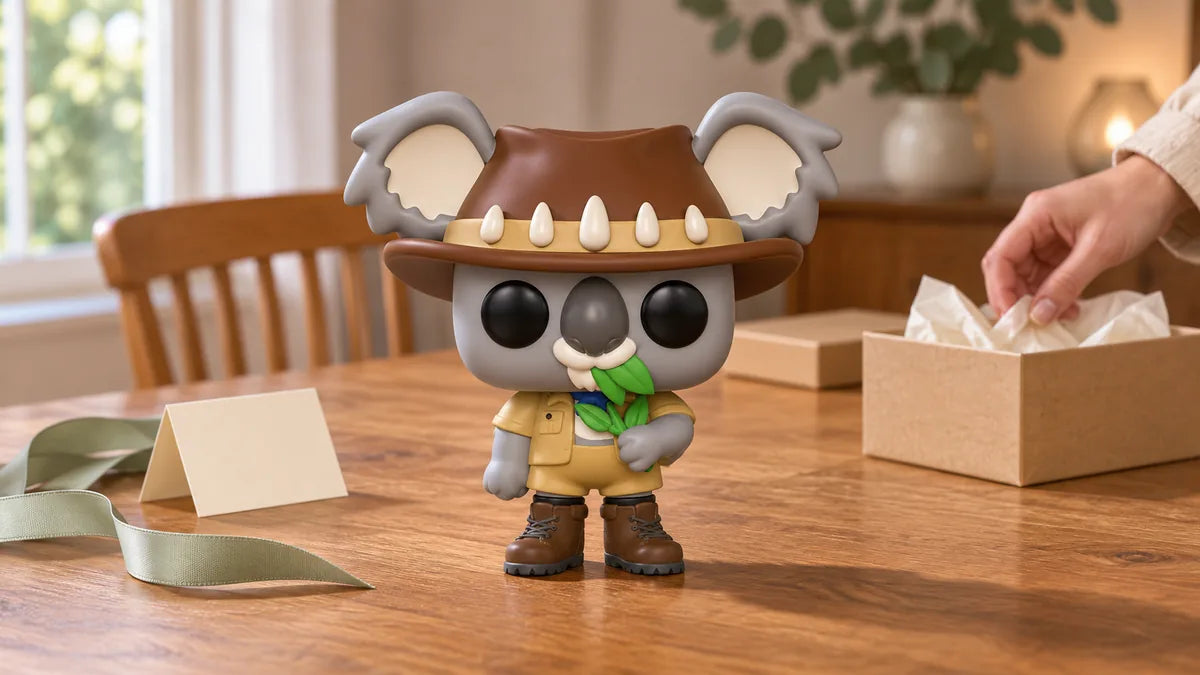
You know they like Funko Pops. You do not know why the two nearly identical figures on their shelf are, apparently, completely different. That is useful information about your gift-buying position.
You do not need to learn an entire fictional universe to choose well. The most reliable starting point is an exact reference: a product link, a clear wishlist entry or a photo of the figure they want. Then you can check the version, possible duplicates and where it will live. If you cannot establish their preference, a different kind of gift is more thoughtful than a random character.
The important distinction is between someone who enjoys a favourite story and someone who actively collects its figures. These four familiar situations show why the same buying approach will not suit both.
The occasional fan: choose the memory, not the most elaborate edition
Imagine buying a birthday present for a friend who regularly rewatches a series you enjoyed together. They do not have a collection, but they have mentioned wanting something cheerful for their desk.
Here, a Funko Pop could work as a small reminder of a shared favourite. The appeal is recognition and connection, not completing a set. Your useful clue is the programme you both loved; the missing information is which character and appearance actually mean something to them.
Rather than trying to decode merchandise yourself, turn it into a visual conversation. You might say: "I never remember the character names properly-which one would you put on your desk?" Ask them to show you a picture or send a link. You are gathering a preference, not setting a fandom exam.
Once they identify a figure, stick to that reference. An unfamiliar costume, unusual finish or elaborate scene may be less meaningful than the familiar appearance they chose. More decorative does not automatically mean more personal.
This approach fails when a shared memory becomes your only evidence. Watching a series together does not prove they want merchandise, and loving a story does not mean loving every character in it. If they prefer uncluttered spaces or show no interest in displaying a figure, keep the shared favourite in the card rather than forcing it onto their desk.
For this recipient, the gift works when it says, "I remembered something you enjoy"-and gives them something they actually want to see each day.
Use this quick buying checklist before choosing the next option:
- Match the product or category to the occasion, recipient or use case.
- Compare size, care needs, setup effort and everyday practicality.
- Decide which trade-offs matter most before browsing similar alternatives.
- Check whether a more specific category or guide gives a better next step.
- Avoid choosing only by novelty if durability, fit or repeat use matters.
- Pick the option that makes the next decision easier, not just the quickest click.
The active collector: let precision carry the thoughtfulness
Now change the scene. You are buying for a sibling whose shelves already hold rows of boxed figures. You recognise the franchise, spot a character they like and assume you have cracked it.
Not quite. With an active collector, knowing the character may only get you halfway. They may already own that figure, prefer a particular appearance or be deliberately collecting a narrow part of the range.
Ask for the exact listing rather than buying from a franchise name alone. A useful request is: "Send me a couple of figures you would genuinely like, including the versions, and I'll choose from those." The final choice can still be a surprise, while the important details are settled.
When comparing the reference with a listing, match the full product name, pictured appearance, format and stated size. A familiar character name is not enough if the listing describes a different pose, costume, finish or larger display piece. If the description says the supplied variant is random, do not assume you can select the one shown in a particular image.
Duplicate checking deserves equal attention. A recent wishlist is more useful than an old screenshot. Someone who knows the collection may help confirm a missing figure, but a photo of one shelf is not necessarily the whole collection.
This is where a well-intentioned "upgrade" can backfire. Substituting a bigger or more elaborate version may change both the display footprint and the collector's intended grouping. If the requested version does not suit your budget, ask for another wanted option instead of choosing a different edition unannounced.
For this recipient, accuracy is part of the affection. The surprise can be the timing, the card or which wishlist choice you made - not whether you bought the right thing.
The Secret Santa colleague: a vague interest is not a shopping instruction

At an office gift exchange, your information may amount to "likes films" and "has something collectible near their monitor". That is a long way from knowing which Funko Pop they would welcome.
A figure can work if a colleague has explicitly pointed out one they want, or a trusted organiser can discreetly confirm it. Without that evidence, the risk is not just choosing an unfamiliar character. You could buy a duplicate, select something from a series they do not follow or give them a permanent desk ornament they feel obliged to display.
This is also the moment to keep the spending limit in charge. A Secret Santa budget does not need stretching to make a speculative fandom choice look more impressive. If the exchange has a $30 ceiling, LatestBuy's gifts under $30 provide a budget-led browsing route; assess suitability rather than assuming every item fits every workplace.
Known habits are better clues than guessed fandoms. If you have seen a genuine practical need at their desk, browsing electronics and gadgets may make more sense than choosing a character. Check any device compatibility and setup requirements before buying: a practical gift stops being practical when it creates a small technical project.
The contrast matters. A confirmed figure can feel delightfully specific. An unconfirmed one can feel oddly impersonal, despite all that character detail. For a colleague you barely know, choosing something relevant to an observed habit is not less thoughtful-it is better use of the information you actually have.
The younger fan: separate "I love that character" from "I want a display figure"

For a younger relative, enthusiasm can be wonderfully clear and still leave the buying decision unresolved. They may love a character but want something to play with, not something to keep on a shelf.
Before choosing a Funko Pop, ask the child or their parent what they expect to do with it. Is this a bedroom display piece? Something they have specifically requested? Or are they imagining a toy for active play?
A display figure can be a good match when the recipient wants that format and has somewhere suitable to keep it. It is a weaker match when the expectation is a poseable toy, a game or an object designed for rough handling. Do not assume those features from the character or the product photograph.
Check the stated age guidance, warnings and product description for the specific item. A stylised face is not an age recommendation. If you are unsure about suitability, involve a parent or carer rather than trying to infer it from appearance.
There is also a difference between a gift for their room and a gift for spending time together. If the birthday plan is about shared fun, Family Games offer a different browsing direction. Choose according to the players' ages, group size and likely attention span, and confirm whether the game stands alone or requires something else.
That alternative works because it changes the activity, not because all young fans want games. If they have asked for a particular display figure, substituting an activity may miss the point just as much as buying a random character would. Let their intended use settle the choice.
Make room for the gift beyond the unwrapping

Across all four situations, the strongest choice fits what happens after the wrapping comes off. The occasional fan needs a welcome reminder of a favourite. The collector needs the right version. The colleague needs a gift that does not depend on invented familiarity. The younger recipient needs a format that matches how they want to enjoy it.
For a figure, that next chapter includes physical space. Check the stated dimensions and whether the recipient displays items boxed or unboxed. A larger figure or a piece with a broad base needs more room than its thumbnail suggests. Keeping the box also creates a storage consideration, even if the figure itself goes on a desk.
Leave retail packaging as supplied unless the recipient has asked otherwise. Put tape and gift labels on the outer wrapping, not directly on a collector's box. Keep the order details, and read the retailer's applicable returns conditions before purchase rather than promising an exchange yourself.
A short card can supply the personal touch without requiring a risky product choice: "For the series we kept saying we'd watch just one more episode of" says more than choosing the most elaborate edition.
Once you have a clear reference, browse LatestBuy's Funko collection and compare the relevant listing with what the recipient showed you. The collection is a place to narrow a known preference, not a test of how confidently you can guess.
You do not have to know every character. You just need to know why this particular gift belongs with this particular person.
For the next browse step, compare the fit against LatestBuy gift guide.