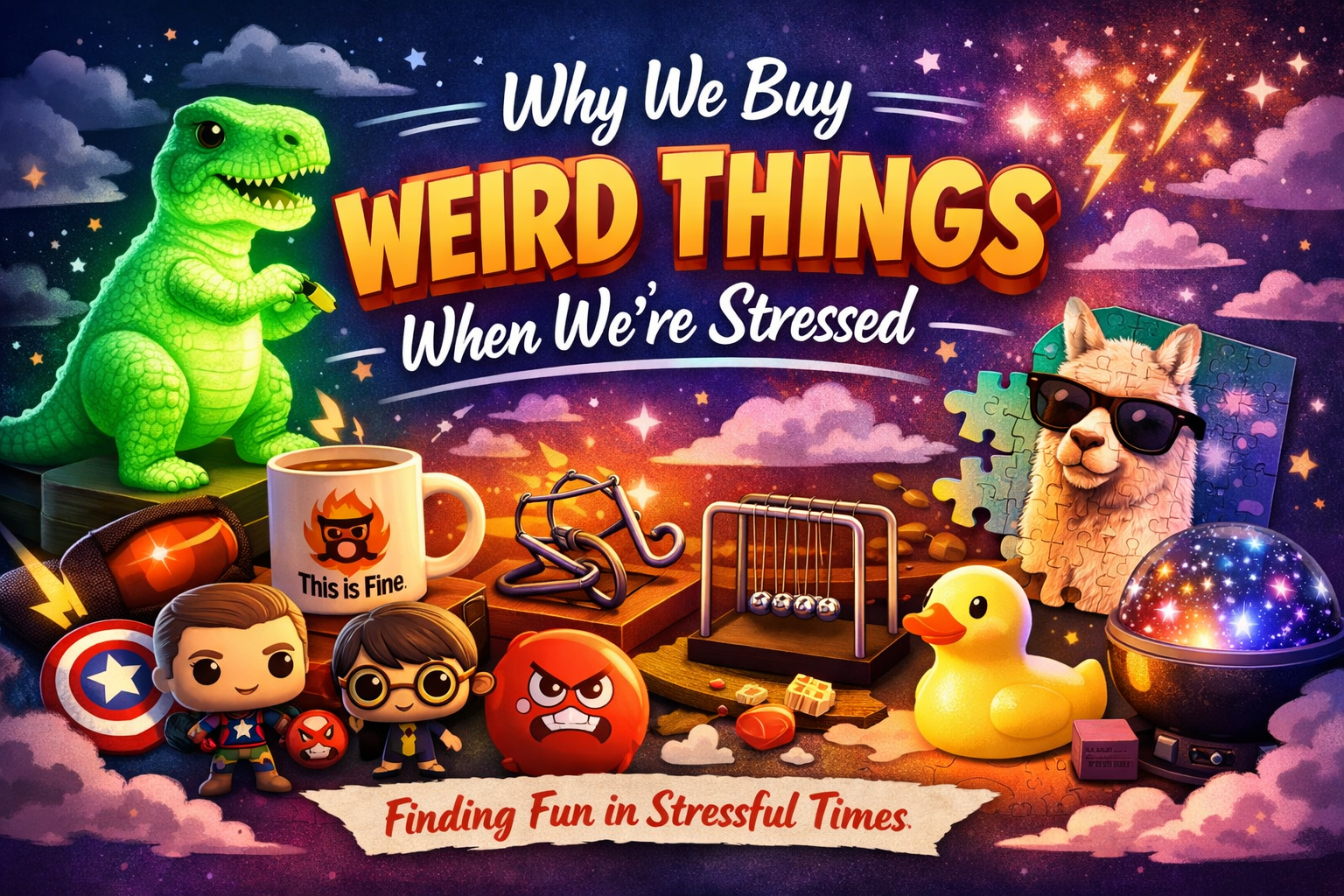
Ever noticed how a tough week can suddenly make a glow-in-the-dark dinosaur lamp feel like a completely rational purchase?
You’re not alone. When stress levels spike, our brains start craving comfort, distraction, and small wins. That’s when we end up buying things that seem… unusual. A desktop punching bag. A novelty mug that screams when you pour hot water into it. A 1,000-piece puzzle of a llama in sunglasses.And surprisingly? These “weird” purchases often work. Let’s unpack why people buy weird things when they’re stressed, what the psychology says about it, and how these quirky buys can actually be helpful.
Why Do People Buy Weird Things When They’re Stressed?
When we’re stressed, the brain looks for quick ways to regain control, comfort, or distraction. Buying something unusual, playful, or novel triggers a small dopamine boost — the “feel-good” chemical linked to reward and motivation. Weird or novelty items work especially well because they break routine, spark curiosity, and shift focus away from whatever is causing tension. In short, they provide emotional relief, even if it’s temporary — and sometimes that reset is exactly what we need.
1. Fidget Gadgets & Stress Toys
Clicky pens used to do the job. Now? We’ve levelled up. Stress often shows up physically — restless hands, tapping feet, nervous energy. That’s why fidget toys, desk gadgets, and tactile puzzles are such popular stress purchases. Think:
- Magnetic desk sculptures
- Satisfying metal puzzles
- Squishy stress balls
- Desktop kinetic toys
They’re simple, but they give your brain something repetitive and soothing to focus on. For many adults, tactile toys aren’t childish — they’re functional tools for focus and calm.If you browse through novelty desk accessories or puzzle collections, you’ll see exactly why they’re so addictive. Why they work:
Repetitive motion regulates the nervous system and helps reduce anxiety.
2. Ridiculously Specific Novelty Mugs
Stressed? Suddenly, that mug that says “I Survived Another Meeting That Should’ve Been an Email” feels essential. Novelty mugs are one of the most common stress buys. They combine humour, validation, and caffeine — a triple win.They also serve as small emotional anchors. Every morning, that mug becomes a reminder that:
- You’ve got this.
- You’re not alone.
- At least your coffee understands you.
Humour is a powerful coping mechanism. Even a small laugh can lower stress hormones and improve mood. Why they work:
They turn daily rituals into mini therapy sessions.
3. Randomly Specific Collectibles
Funko Pops. Pop culture figurines. Limited-edition fandom merch. CollectIbles are a stress shopper’s best friend. When life feels chaotic, collecting something structured and contained feels grounding. There’s order. There’s completion. There’s a shelf that slowly becomes a curated display of joy. Collectibles also tap into nostalgia — and nostalgia is deeply comforting. Whether it’s anime figures, retro toys, or classic character memorabilia, these items reconnect us to simpler times. And yes, that’s why adding “just one more” feels justified. Why they work:
They create a sense of control and spark positive memories.
4. Puzzles That Are Weirdly Hard
When overwhelmed, some people want a distraction. Others want total mental immersion. That’s where puzzles come in: 1,000-piece jigsaws. Brain teasers. Metal disentanglement puzzles. Logic games that make you mutter, “Just five more minutes.”These purchases feel counterintuitive — you’re stressed, so you buy something challenging? But here’s the trick: Focused problem-solving forces your brain to stop looping on stress triggers. It creates “flow,” a state where time disappears and your mind resets.Why they work:
They interrupt anxious thought patterns and build small, satisfying wins.
5. Absurd Home Décor
A duck-shaped lamp. A neon wall sign. A lava lamp. A galaxy projector that turns your ceiling into outer space. When stress hits, many people redecorate in tiny, chaotic bursts. Changing your environment — even slightly — can dramatically shift your mood. Novelty homewares are low-commitment, high-impact upgrades. A quirky piece on your desk or bedside table becomes a conversation starter. A mood booster. A reminder that life doesn’t have to be so serious.Why they work:
Environment influences emotion. Small visual changes can feel like a fresh start.
6. Comfort-Driven “Why Did I Buy This?” Items
Sometimes stress shopping looks like:
- A heated blanket in the middle of summer
- A nostalgic candy box
- A ridiculously plush throw pillow
- A gadget you didn’t technically need
Comfort buying behaviour is less about logic and more about emotional regulation. Soft textures, sweet flavours, and cosy vibes send safety signals to your brain. There’s science behind it — sensory comfort lowers cortisol (the stress hormone). Why they work:
They create physical reassurance during emotional overload.
Is Stress Shopping Always a Bad Thing?
Not necessarily. There’s a difference between mindful comfort buying and impulsive overspending. When done intentionally — with a budget and awareness — buying something small and joyful can be healthy. Here’s a quick gut-check:✔ Does this item genuinely make me smile?
✔ Can I afford it without regret?
✔ Will I actually use or display it? If the answer is yes, it’s less about “retail therapy explained” in a negative way — and more about strategic mood management.
How to Stress-Shop Smarter
If you know you’re prone to buying weird things when stressed, lean into it wisely:
- Set a small “fun fund” budget
- Choose items that offer ongoing value (puzzles, décor, desk gadgets)
- Pick things that encourage relaxation or creativity
- Consider gifts — spreading joy multiplies the dopamine
Browsing curated collections of unique gadgets, puzzles, collectibles, and novelty gifts can actually make the process more intentional — you’re choosing fun, not spiralling into random checkout chaos.
Key Takeaways
- Buying weird things when stressed is linked to dopamine and emotional regulation.
- Novelty items provide distraction, humour, and comfort.
- Collectibles and puzzles restore a sense of control.
- Small environment upgrades can shift mood quickly.
- Mindful, budget-conscious “comfort buying” can be positive.
Final Thoughts: Weird Can Be Wonderful
Stress is part of modern life. But small, unexpected joys? They’re powerful. Whether it’s a brain teaser that keeps your hands busy, a quirky desk gadget that sparks conversation, or a collectible that makes you grin every time you see it — these purchases aren’t as random as they seem. They’re tiny mood lifters. If you’re in the mood to discover something a little unusual (in the best way), explore fun lifestyle products, novelty gifts, puzzles, and collectibles that turn everyday stress into everyday smiles.Because sometimes the weirdest things… work the best.